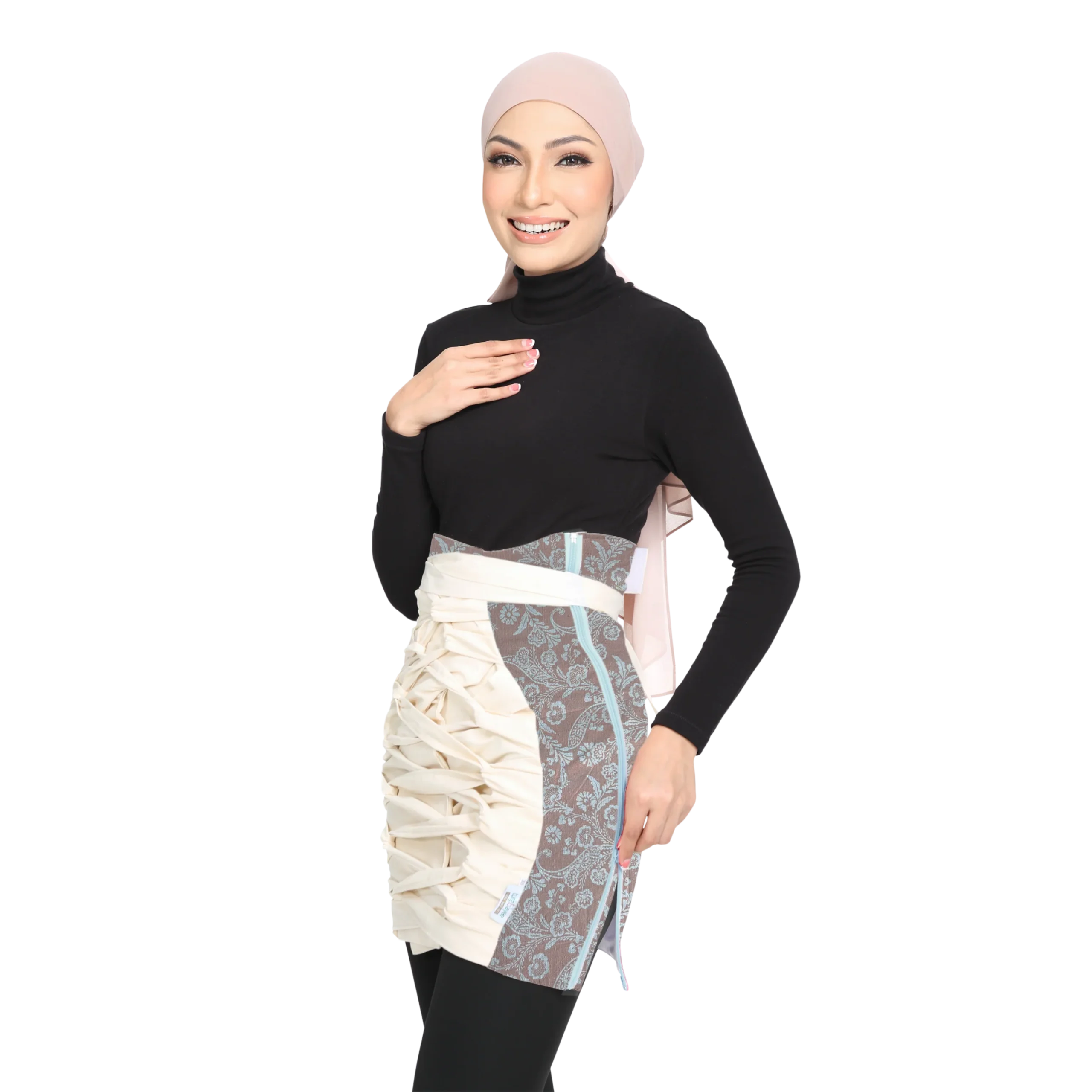
The postpartum period is an important time for mothers to rest and allow the body to recover. The use of a belly binder or bengkung should not be rushed, as the appropriate timing can vary from one mother to another. Wound healing, physical recovery, energy levels, and the type of delivery should all be considered.
| Postpartum Period | Vaginal Birth | Caesarean Birth | Key Focus |
| Weeks 0–2 | Bed rest and side-lying while feeding | Bed rest and wound care | No binding yet; practice gentle diaphragmatic breathing |
| Weeks 2–4 | Replenish qi and blood | Wound care and avoid vigorous movement | Focus on recovery and assess suitability for belly binding |
| Weeks 4–6 | Begin a belly-binding assessment | Continue wound stabilisation | Mothers who had a vaginal birth may begin their first binding session |
| Weeks 6–8 | Enter a fuller belly-binding programme | Begin a belly-binding assessment | Combine binding with pelvic realignment exercises |
| Week 8 onwards | Binding combined with core rebuilding | Enter a fuller belly-binding programme | Gradually add deep core training and resume daily activities |
Every mother’s recovery journey is different. Mothers who have had a Caesarean birth or are experiencing discomfort during recovery should consult a healthcare professional before using a belly binder. Side-lying can also be a comfortable resting position during early postpartum recovery.Looking for a quality bengkung to support your postpartum recovery? Visit JualBengkung.com to explore a range of bengkung options suitable for different needs. Discover the products and learn more at jualbengkung.